Revolutionize Your Business with Finesse Business Suite CRM
Automate, Nurture, and Grow with AI-Powered Conversations
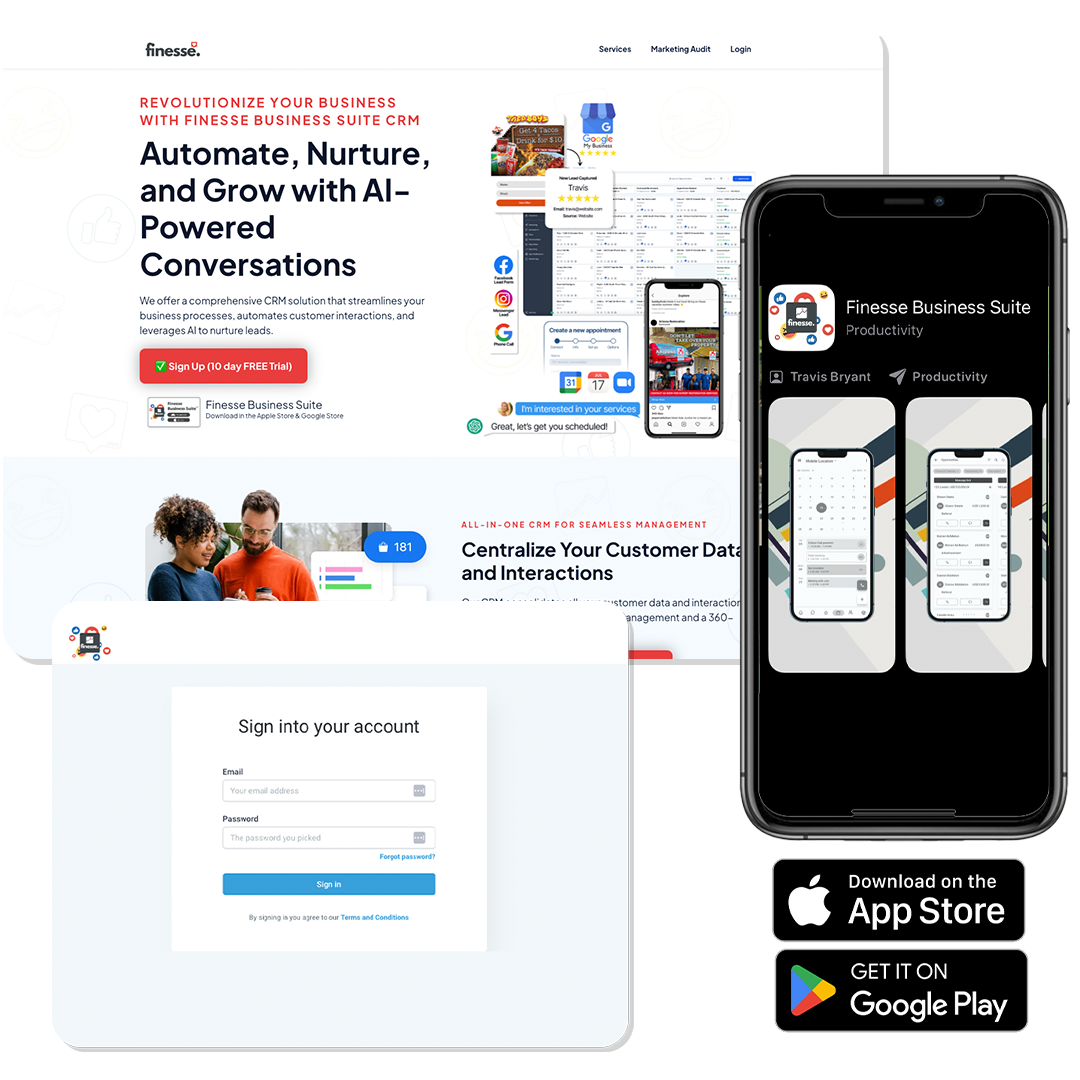
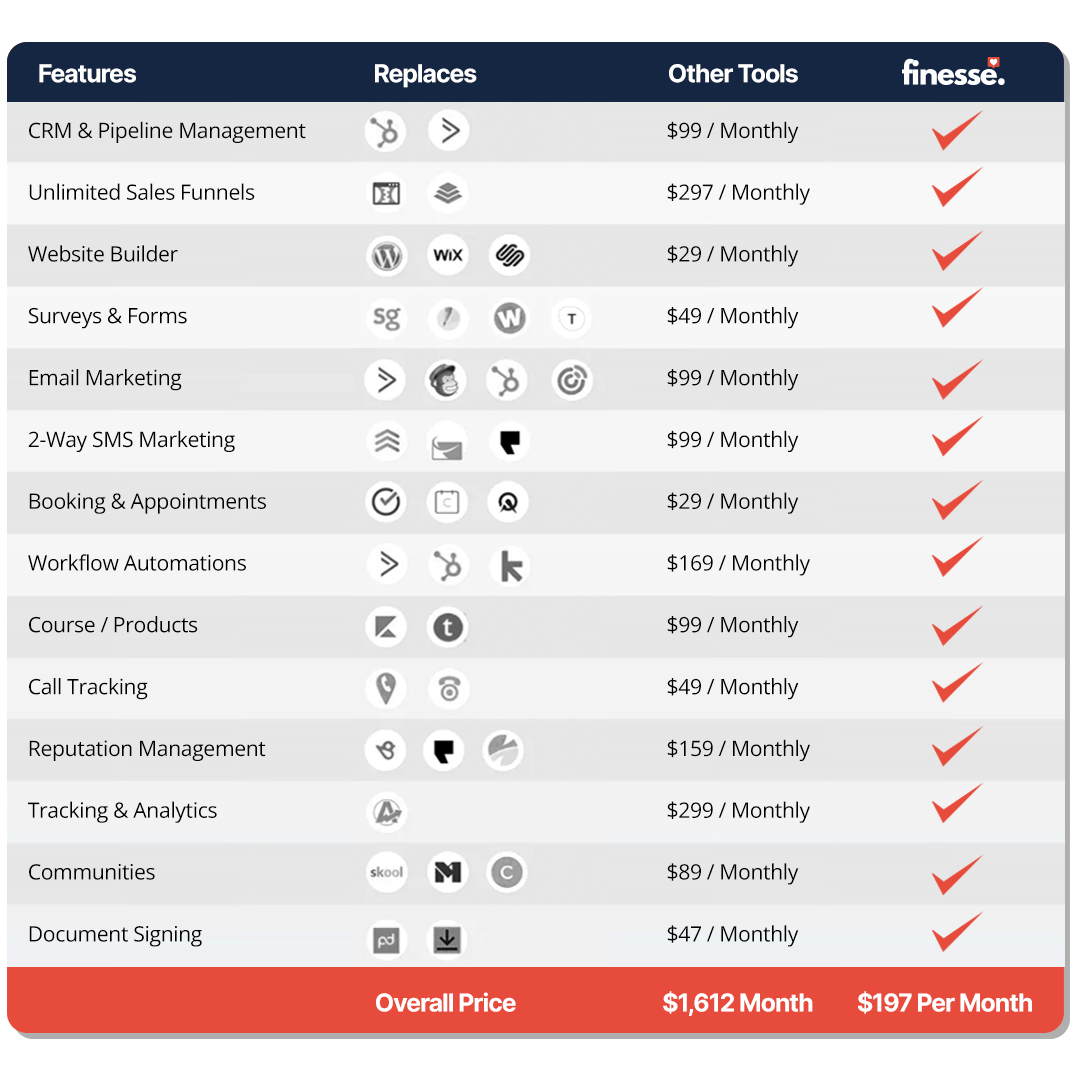
We offer a comprehensive CRM solution that streamlines your business processes, automates customer interactions, and leverages AI to nurture leads.
Finesse Business Suite
Download in the Apple Store & Google Store
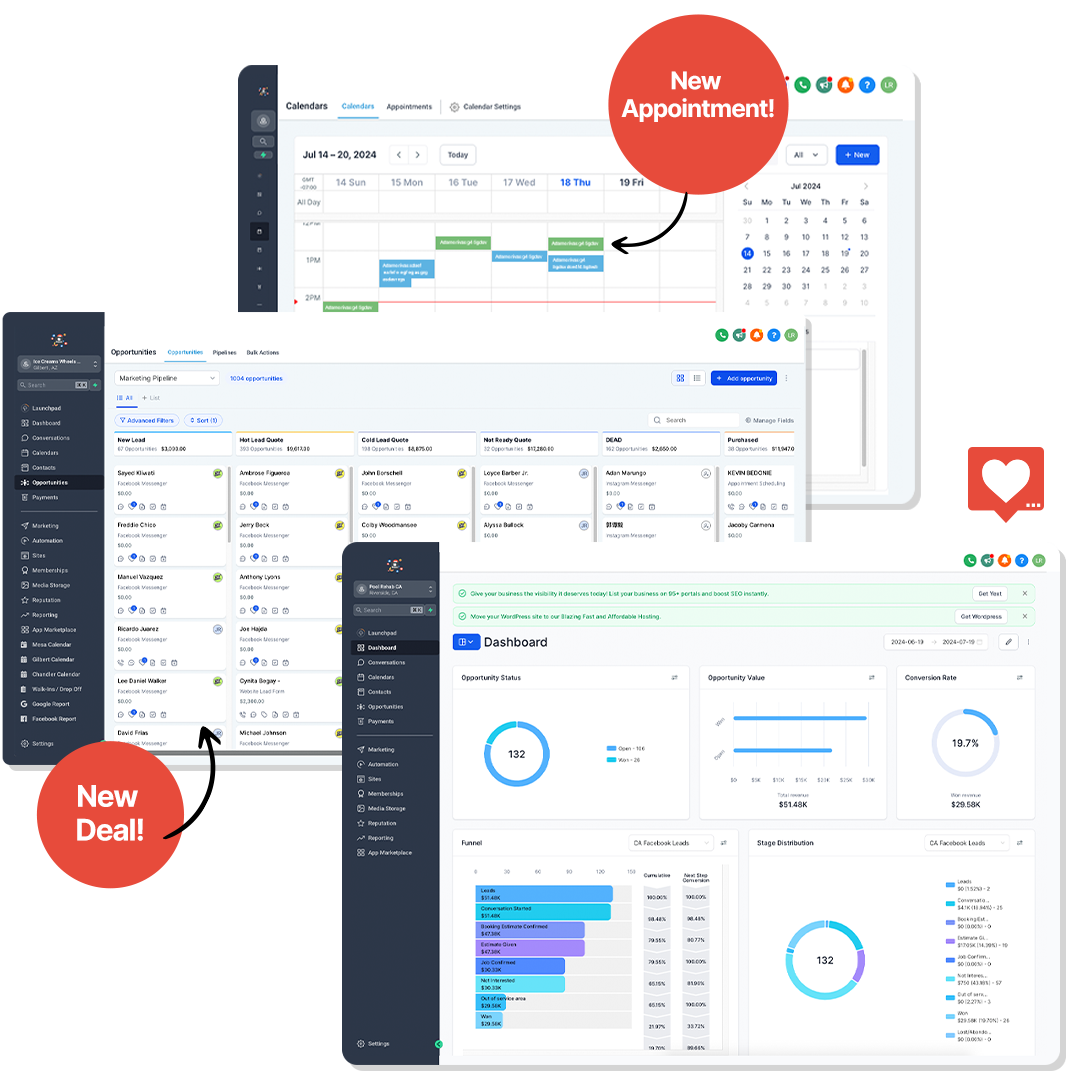
All-in-One CRM for Seamless Management
Centralize Your Customer Data and Interactions
Our CRM consolidates all your customer data and interactions in one place. This ensures seamless management and a 360-degree view of your customers.
Automation to Streamline Your Processes
Automate Repetitive Tasks and Save Time
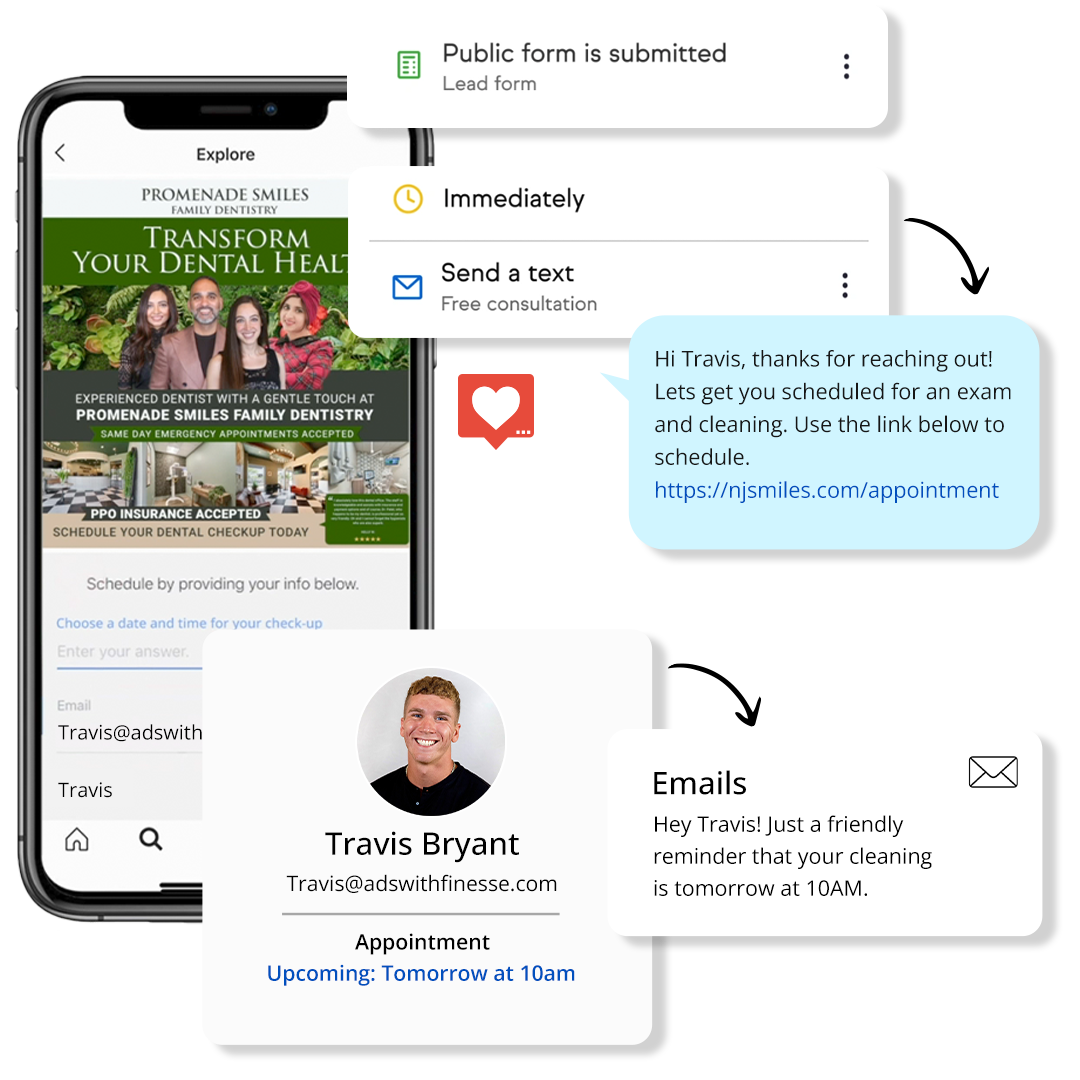
Automate repetitive tasks like follow-ups and data entry to save time. Focus on what matters most while our CRM handles the rest.
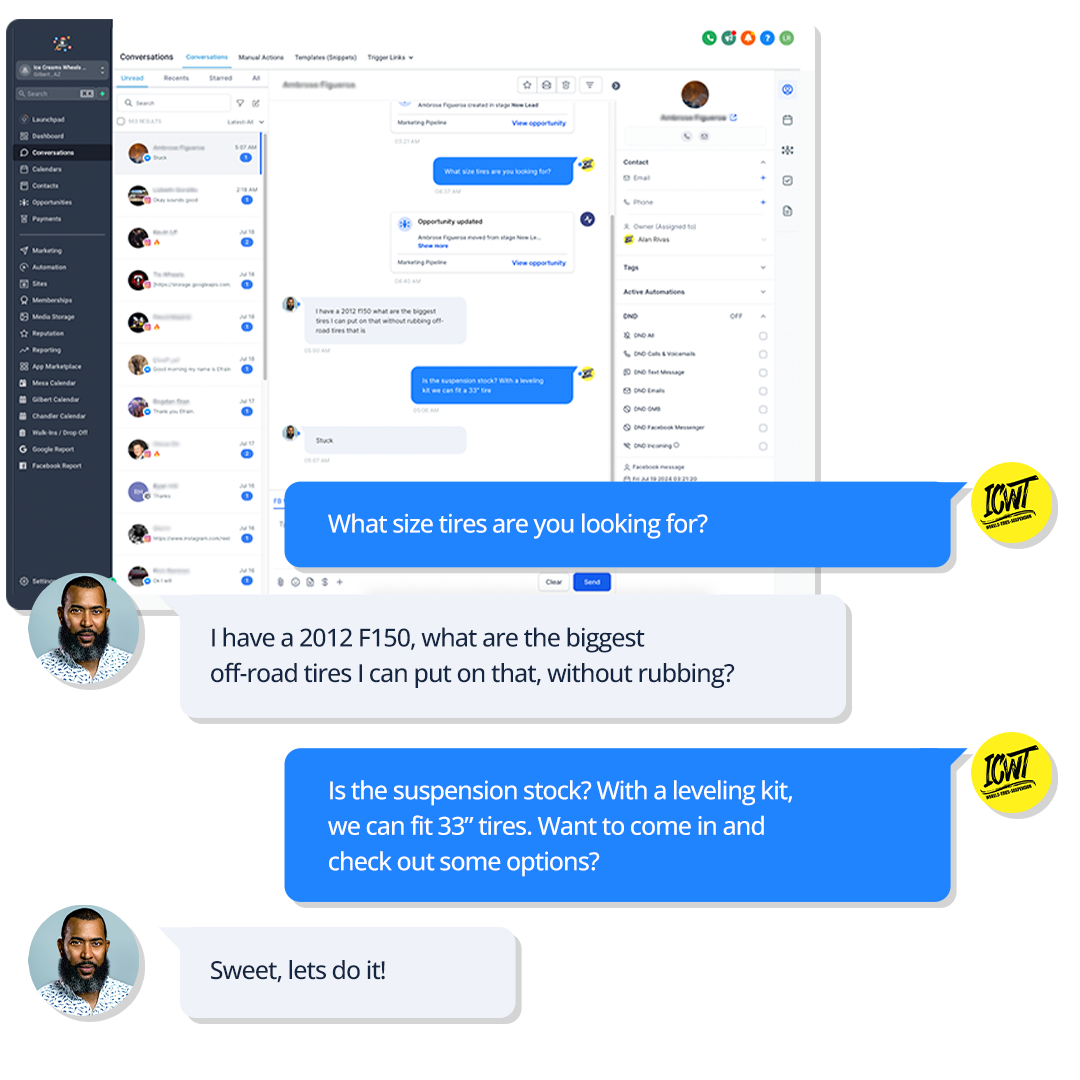
AI-Powered Conversations for Better Engagement
Leverage AI to Nurture Leads and Customers
Our AI-powered conversation tools engage leads and customers with personalized interactions through Facebook & Instagram comments, DMs, Google My Business responses, Email, SMS, website chat, and more. Nurture relationships and drive conversions effortlessly.
Advanced Analytics for Informed Decisions
Gain Insights with Comprehensive Reporting
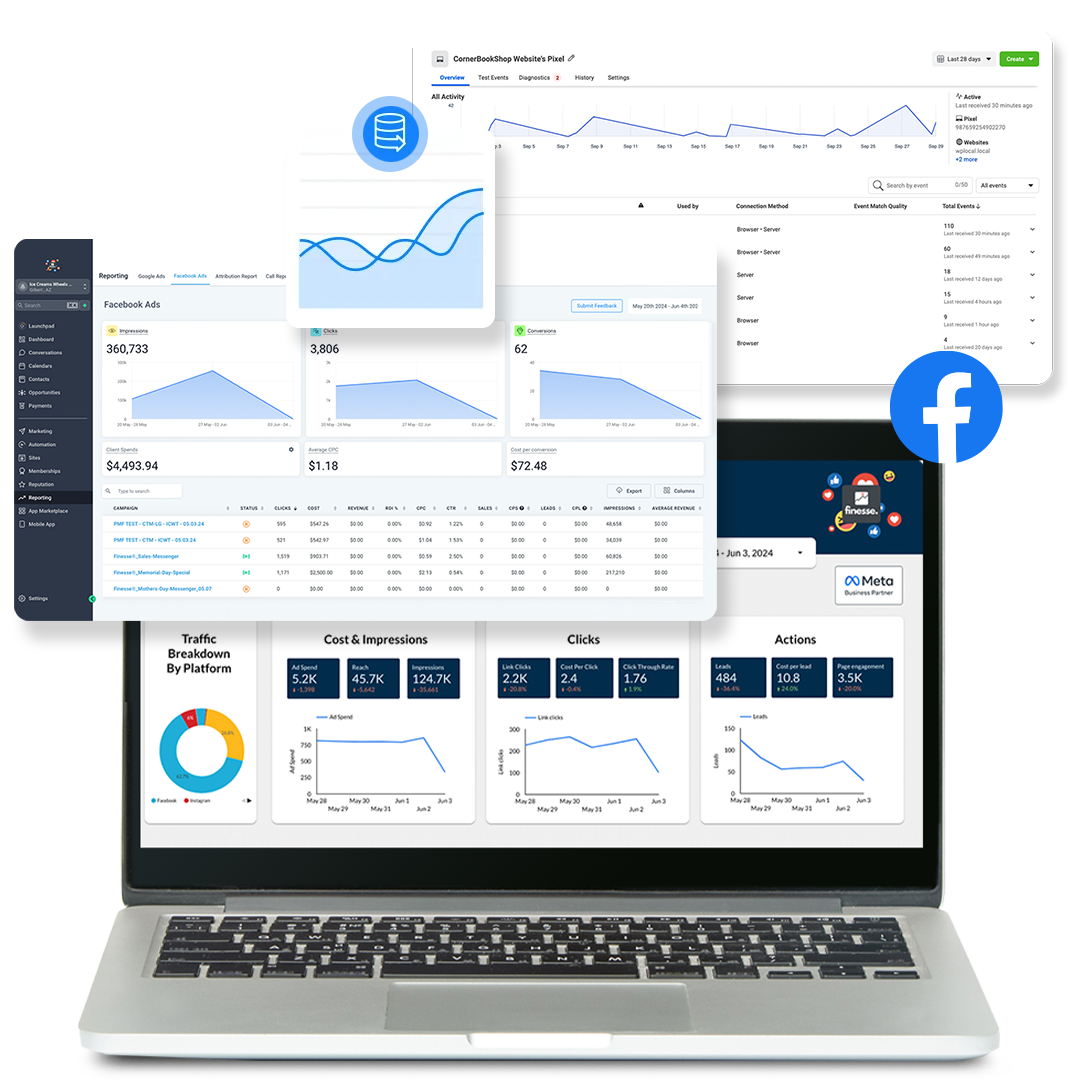
Leverage our advanced analytics to gain insights into your customer interactions. Make data-driven decisions with our comprehensive reporting tools.
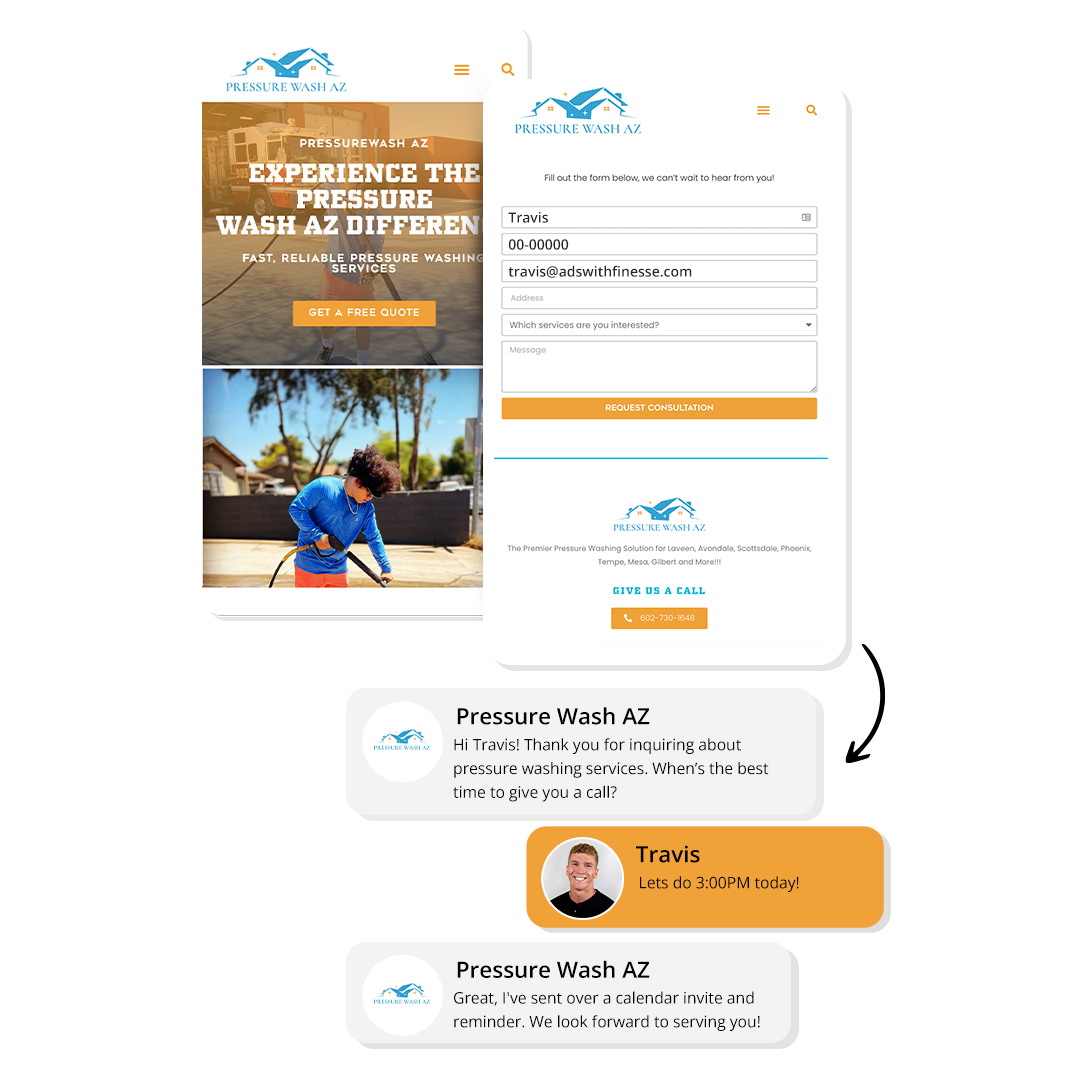
Seamless Integration with Your Tools
Integrate with Your Existing Systems
Our CRM integrates seamlessly with your existing tools and systems. Ensure smooth workflows and enhanced productivity.
Still got questions?
Frequently Asked Questions
What features does the Finesse Business Suite CRM offer?
The Finesse Business Suite CRM offers features like customer data management, task automation, AI-powered conversations, advanced analytics, and seamless integration with existing tools.
How does the automation feature work?
Our automation feature streamlines repetitive tasks such as follow-ups, data entry, and scheduling. This allows you to focus on more strategic activities while the CRM handles routine tasks.
What is the benefit of AI-powered conversations?
AI-powered conversations engage leads and customers with personalized interactions, nurturing relationships and driving conversions. This ensures better engagement and higher customer satisfaction.
How do the analytics and reporting tools help my business?
Our advanced analytics and reporting tools provide insights into customer interactions and campaign performance. This helps you make informed, data-driven decisions to optimize your CRM strategy. This landing page structure ensures that each section is clear, engaging, and informative, with visuals that complement the text and enhance the overall user experience.

The Best Keyword Match Types for Google Ads in 2025: A Complete Guide

Google Ads Match Types Explained: How to Optimize Your PPC Strategy in 2025
Choosing the right keyword match type is essential for running a successful Google Ads campaign. With Google’s evolving algorithms, understanding Broad Match, Phrase Match, and Exact Match can help lower ad costs, improve targeting, and increase conversions.
In this guide, we’ll break down the best keyword match types for Google Ads in 2025, their pros and cons, and when to use them for the best results.
Understanding Google Ads Keyword Match Types
Google Ads allows advertisers to use three main keyword match types:
✔ Broad Match
✔ Phrase Match
✔ Exact Match
Each match type controls how closely a user’s search query must match your chosen keywords before triggering your ad.
Broad Match: Best for Maximum Reach
Definition: Broad Match allows your ad to appear for related searches, including synonyms, variations, and related queries.
Example: If your keyword is "digital marketing agency", Google may show your ad for:
"online marketing services"
"advertising agencies near me"
"SEO company"
✅ Pros:
✔ Maximizes reach and impressions
✔ Finds new keyword opportunities
✔ Best for brand awareness campaigns
❌ Cons:
🚫 Can result in irrelevant traffic
🚫 Higher ad spend if not optimized with negative keywords
🛠️ Best Use Case:
Use Broad Match when launching a new campaign or testing new keywords. Always use negative keywords to filter out unwanted traffic.
Phrase Match: Best for Targeted Traffic
Definition: Phrase Match ensures your ad shows only when the search query includes your keyword in order, but with additional words before or after.
Example: If your keyword is "digital marketing agency", Google may show your ad for:
"best digital marketing agency near me"
"affordable digital marketing agency services"
✅ Pros:
✔ More control over ad relevance
✔ Balances reach and targeting
✔ Reduces wasted ad spend compared to Broad Match
❌ Cons:
🚫 Less reach than Broad Match
🚫 May still show for slightly irrelevant variations
🛠️ Best Use Case:
Use Phrase Match for lead generation and e-commerce campaigns where search intent matters.
Exact Match: Best for Precision & High ROI
Definition: Exact Match ensures your ad appears only when the search query is an exact match or a very close variation of your keyword.
Example: If your keyword is [digital marketing agency], Google may show your ad for:
"digital marketing agency"
"digital marketing agency near me"
✅ Pros:
✔ Highest targeting accuracy
✔ Lower wasted ad spend
✔ Better conversion rates
❌ Cons:
🚫 Lowest reach among match types
🚫 Requires more keyword research to find the right terms
🛠️ Best Use Case:
Use Exact Match for high-converting campaigns, retargeting, and niche services with strong buyer intent.
Best Keyword Match Type Strategy for 2025
🔹 Start with Broad Match + Smart Bidding to gather data
🔹 Refine with Phrase Match to improve ad targeting
🔹 Use Exact Match for high-intent searches to maximize ROI
🔹 Always add Negative Keywords to prevent wasted ad spend
Conclusion
Using the right Google Ads keyword match type in 2025 is crucial for running profitable PPC campaigns.
✔ Broad Match = Maximum reach
✔ Phrase Match = Balanced targeting
✔ Exact Match = Highest precision
By combining these match types strategically, optimizing negative keywords, and monitoring performance metrics, you can achieve higher conversions and lower ad costs.
How Ads with Finesse Can Help You
At Ads with Finesse, we specialize in crafting ad campaigns that highlight the best customer experiences, ensuring your audience connects with your brand on an emotional level. Our team carefully selects authentic, high-impact reviews and seamlessly integrates them into your ad strategy.
Learn more about our services today and turn you Google Ads into your most powerful marketing tool with Ads with Finesse.
Let’s create ads that resonate, convert, and build trust.
Check out our blog and services at adswithfinesse.com.


© 2025 Ads with Finesse | Terms & Conditions | Privacy Policy
Ads With Finesse continually stays up to date with Meta & Google marketing changes related to policies, tools, products and more.


