Can Chargebacks Get Your Facebook Ad Account Suspended? (2026)
Most business owners think of chargebacks as a sales headache. But a rising chargeback ratio can also threaten your advertising, sometimes indirectly and sometimes directly. Here's how disputes connect to a Facebook ad account suspended or restricted, and how to keep both your sales and your ads safe.
1. Two ways disputes hurt your ads
1. Through your payment processor. A high dispute rate can get your merchant account terminated, and can even land your business on the industry's MATCH list. That can cut off the card or account that funds your ads.
2. Through the ad platform. Meta watches its own payment signals, including disputes against its billing, sudden changes in spend, and how risky your payment method looks. Meta payment issues like these can lead to an ad account restricted from running.
2. Visa's dispute threshold got stricter
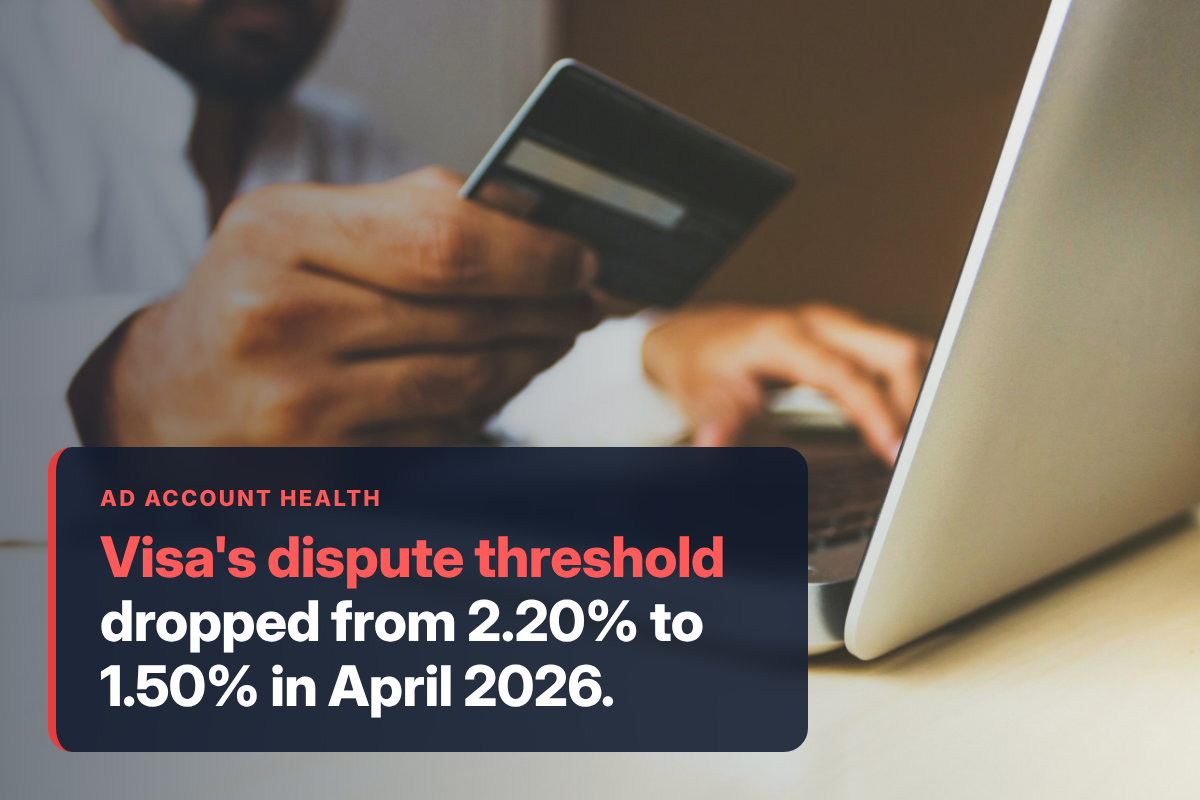
According to AuditSocials' reading of Visa's materials, the Visa dispute threshold under its monitoring program (VAMP) dropped from 2.20% to 1.50% on April 1, 2026, in the US, Canada, the EU, and Asia- Pacific. The ratio counts fraud reports plus disputes, divided by completed transactions, by count rather than dollar value. It applies to merchants with 1,500 or more transactions, and each disputed transaction can cost an $8 fee.
3. Warning signs to watch
Refunds or disputes climbing week over week
Customers not recognizing your business name on their bank statement
Failed charges on your Facebook ads payment method
Subscription charges customers didn't expect
Late or missing deliveries
Ads that promise more than you deliver
4. How to reduce chargebacks
Track your dispute rate weekly so problems show up early.
Keep ad claims honest. Overpromising is one of the top causes of ecommerce chargebacks.
Show pricing and renewal terms clearly before checkout.
Use a billing name customers recognize.
Make your refund policy easy to find, and refund quickly when someone asks.
Use pre-dispute alerts if your payment processor offers them.
Keep your Meta payment method current, and never dispute Meta's own charges unless something is truly wrong.
5. A simple weekly routine
Set aside 15 minutes each week to:
1. Check your dispute and refund numbers in your payment processor's dashboard.
2. Read new disputes to spot patterns, like a product that keeps getting complaints.
3. Scan your ad comments for confused or angry customers.
4. Confirm your ad account billing shows no failed charges.
5. Fix the biggest issue you found before next week.
This habit catches problems while they're small, long before they reach a level that puts your merchant account or your ads at risk.
6. If your disputes are already high
Pause the ads or offers driving the most complaints, tighten your product descriptions and delivery promises, and reach out to recent unhappy customers before they file a dispute. A quick refund almost always costs less than a chargeback.
7. Does Meta see your chargeback data?
It hasn't been confirmed that card networks share this data with ad platforms, and ad platforms don't publish a numeric chargeback limit. But the same problems that cause disputes, like misleading ads and unhappy customers, tend to show up in Meta's own signals too. Fixing the root cause protects you on both sides.
Conclusion:
Chargebacks don't just eat into profit. They can cost you your payment processor and put your ad account at risk. Keep your dispute rate well below Visa's threshold with honest ads, clear terms, and fast refunds.
Check out our blog and services at adswithfinesse.com.
