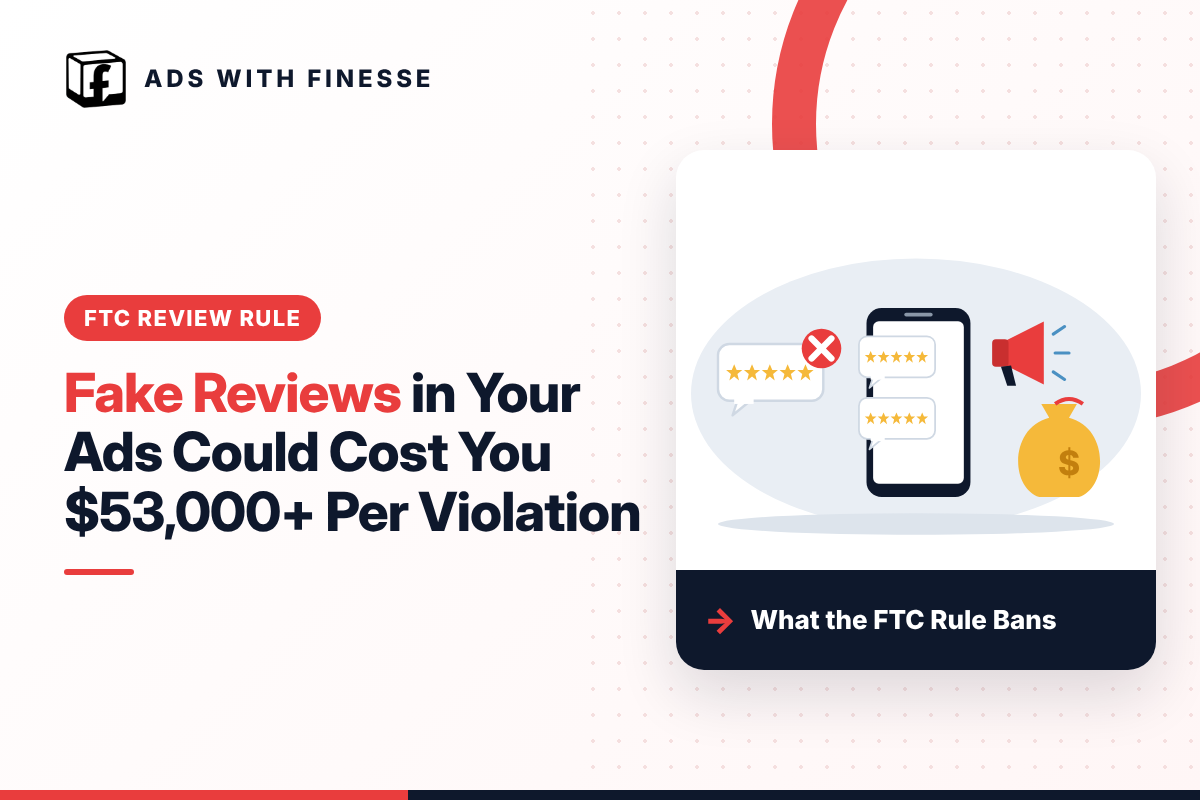
Fake Reviews in Facebook Ads: What the FTC Rule Bans (2026)
Social proof sells. That's why so many Facebook and Instagram ads lean on star ratings, follower counts, and customer quotes. But the FTC consumer review rule draws a hard line between real social proof in ads and fake reviews, and the penalties are steep enough to hurt any small business.
1.The rule at a glance
The rule took effect on October 21, 2024, and has become an active enforcement priority. During the 2025 holiday season, the FTC sent warning letters to ten companies. FTC fines under the rule can reach about $53,088 per violation, a figure that's adjusted for inflation over time. If one ad shows several fake quotes, that adds up quickly.
2. What the rule bans
Fake reviews and testimonials, including AI-generated testimonials
Reviews from people who never used the product or service
Review incentives tied to a positive review
Undisclosed employee reviews, including reviews from managers or their families
Company-run review sites that pretend to be independent
Buying followers, likes, or views to look more popular
Threats or bogus legal claims to get negative reviews taken down
3. Where small businesses slip up
Most violations don't come from big scams. They come from shortcuts:
"Leave a 5-star review and get 10% off!"
Staff posting glowing reviews without saying they work there
Buying followers to look established before running ads
Asking AI to write a few "customer" quotes for Facebook ad testimonials
Each one can feel harmless in the moment. Under the new online review rules, each one is a real risk.
4. How to use customer testimonials in ads the right way
1. Only use real testimonials, and get the customer's permission first.
2. Reward honest reviews, not good ones. An incentive is fine if it isn't tied to the rating.
3. Disclose connections. If an employee or partner leaves a review, say so clearly.
4. Skip bought followers and paid engagement entirely.
5. Answer bad reviews professionally. Never threaten a customer.
6. Brief your team, freelancers, and influencers on the rules.
5. Why it matters for your Meta ads
Meta doesn't allow misleading ads either. Its policies prohibit deceptive advertising, so Instagram ad testimonials or Facebook quotes built on fake proof can lead to rejected ads, and repeated problems can put your ad account at risk. Real small business reviews are safer, and they usually convert better because people can tell when praise is genuine.
6. What a compliant review request looks like
A simple, honest message works best. For example: "Thanks for choosing us! If you have a minute, we'd love your honest feedback on Google or Facebook." There's no mention of stars, no reward for a good rating, and nothing that pressures the customer. If you do offer a small thank-you, give it to everyone who leaves a review, whatever they say. That keeps your incentives clean, keeps your reviews believable, and gives you real feedback you can use to improve.
7. Quick check before you launch
Every testimonial comes from a real customer
No AI-written reviews
Incentives aren't tied to star ratings
Employee and partner reviews are disclosed
No bought followers or likes
Conclusion:
The FTC consumer review rule turns fake reviews, AI testimonials, and bought followers into a costly gamble. Keep your social proof real, disclose every connection, and reward honesty instead of five stars. Your ads will be safer with regulators and with Meta, and your customers will trust them more.
Check out our blog and services at adswithfinesse.com.
